

I Got Screwed by Vimeo in 2017. So I Built Qubee. Now Everyone Else Is Finally Realizing What I Knew Years Ago.
They shut down my account without warning. Deleted years of work. All over bogus copyright claims. Sound familiar?
Vimeo stopped being for creatives years ago
If you're reading this, you probably already know the story: Vimeo just got acquired by Bending Spoons, the Italian tech company with a reputation for gutting beloved apps and jacking up prices. FiLMiC Pro? Dead. Evernote? Gutted. WeTransfer? 75% staff cuts six weeks after acquisition.
But here's the thing everyone's missing: Vimeo died years ago.
I should know. I was there when they killed it.
January 2017: The Day Vimeo Betrayed Me
Let me take you back. It's 2017, and C&I Studios has been a loyal Vimeo customer for years. We're paying subscribers. We follow the rules. We're exactly the kind of creative professional Vimeo claimed to serve—filmmakers who valued quality, who appreciated the ad-free experience, who bought into the whole "creator first" ethos they sold us.
Then one day, without warning, our account was just... gone.
No email. No appeal process. No chance to respond.
Vimeo's automated copyright scanner had decided—all on its own—that some of our videos violated their policies. Never mind that we had proper licensing. Never mind our years of loyal paid subscription. Never mind that these were client projects with legitimate commercial usage rights.
Bogus copyright claims. Account permanently closed. Years of work, gone.
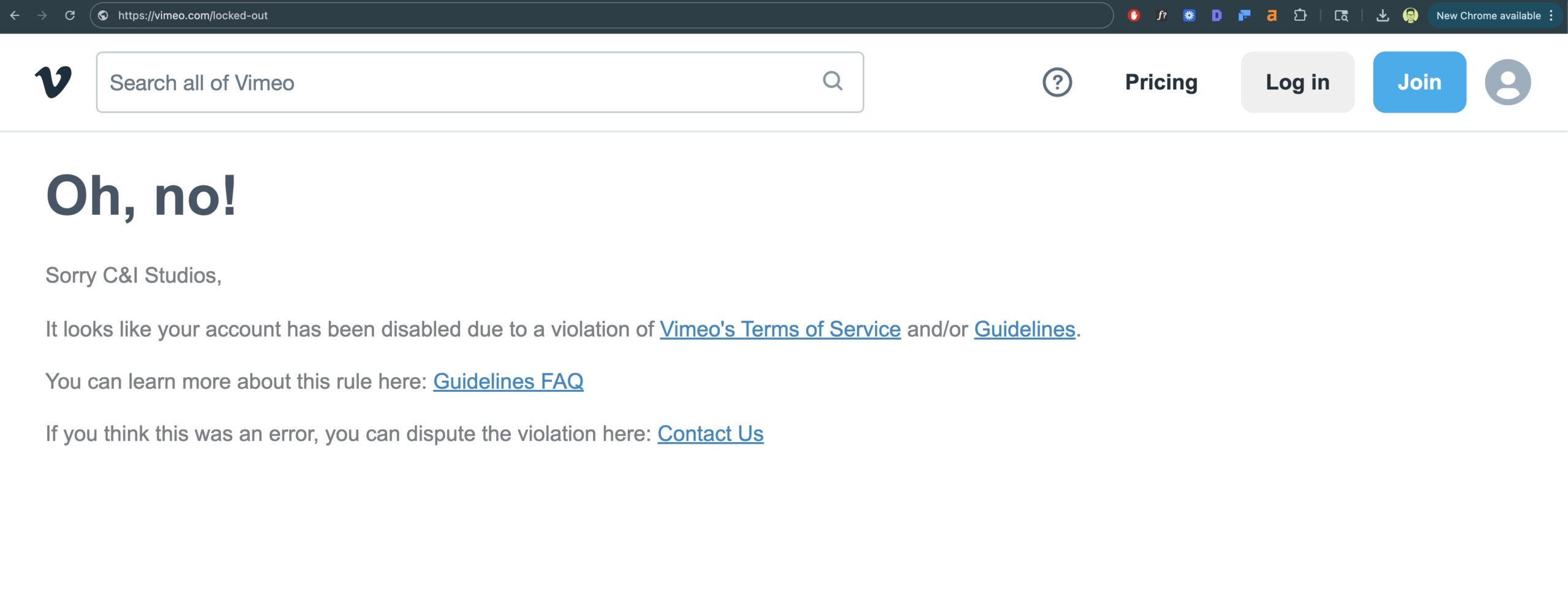
Our very real, still permanently closed Vimeo account
If you've been following the news, you'll recognize this pattern. According to a comprehensive analysis by filmmaker Matt Johnson, Vimeo did this to thousands of loyal users. Wedding filmmakers who used copyrighted music back before Musicbed and Artlist existed—back when there weren't affordable licensing options—woke up to find their decade-old accounts deleted overnight.
The platform scanned every video, including private and unlisted uploads dating back to 2007, and issued strikes retroactively. Users who had already reformed their practices years earlier, who had made old videos private rather than deleting them, got nuked anyway.
The Numbers Don't Lie: A 96% Collapse
Here's the stat that should terrify any current Vimeo user:
Self-serve subscribers collapsed from 1.5 million in 2022 to approximately 53,500 by Q3 2024.
That's not a migration. That's a mass exodus. That's 96% of individual creators and small businesses saying "enough is enough" and abandoning ship.
And this all happened before Bending Spoons even entered the picture.
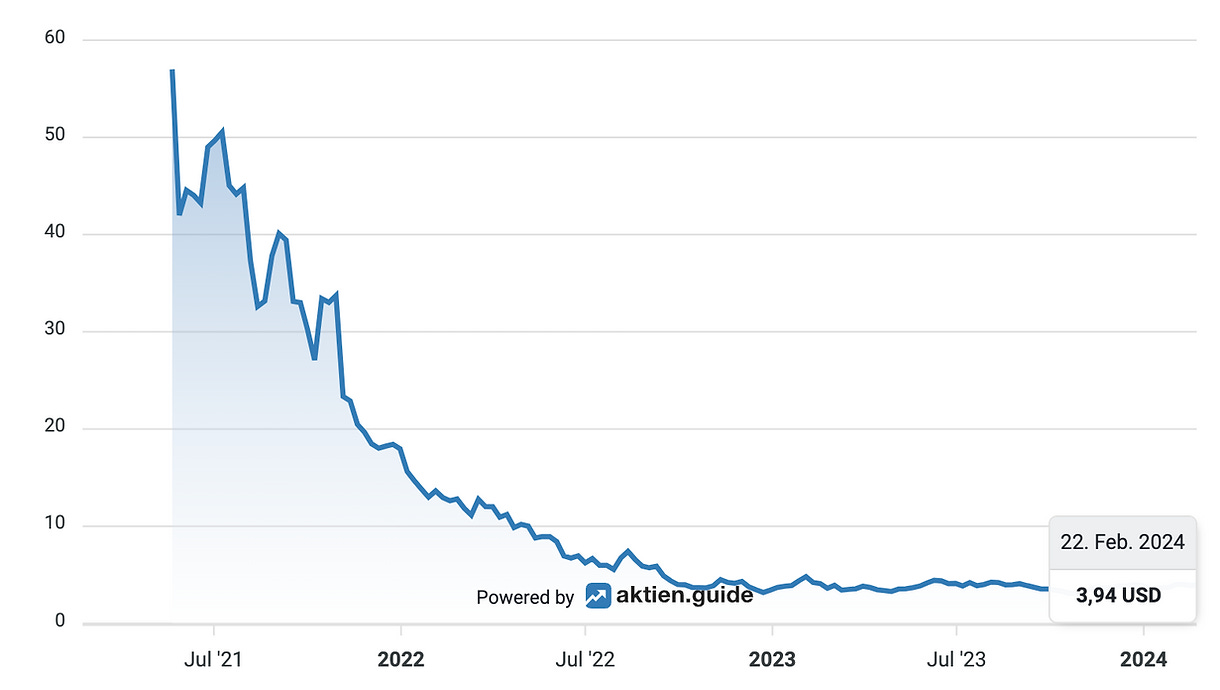
The drop off started before Bending Spoons even arrived
What Vimeo Became (Spoiler: It Wasn't For Us)
While Vimeo was busy deleting loyal creator accounts, they were pivoting hard to enterprise SaaS. Fortune 500 companies. Corporate video hosting. B2B subscriptions at $22,755 per enterprise user.
The filmmaker community that made Vimeo's reputation? The Staff Picks that launched careers for the Daniels, Ari Aster, and the Safdie brothers? The contests and collaborations that premiered at Sundance?
Dead. Discontinued. Abandoned.
Staff Picks has already been shut down in EU and UK regions. The two-terabyte bandwidth limits forced working professionals to either pay exponentially more or delete their entire archives. The current pricing model—$12 to $75 per month (billed annually)—is designed for corporate teams, not individual filmmakers.
Let me be blunt: Vimeo stopped being for creators like us years ago. They chose enterprise money over community loyalty. They chose automated copyright enforcement over human judgment. They chose to burn the village that built them.
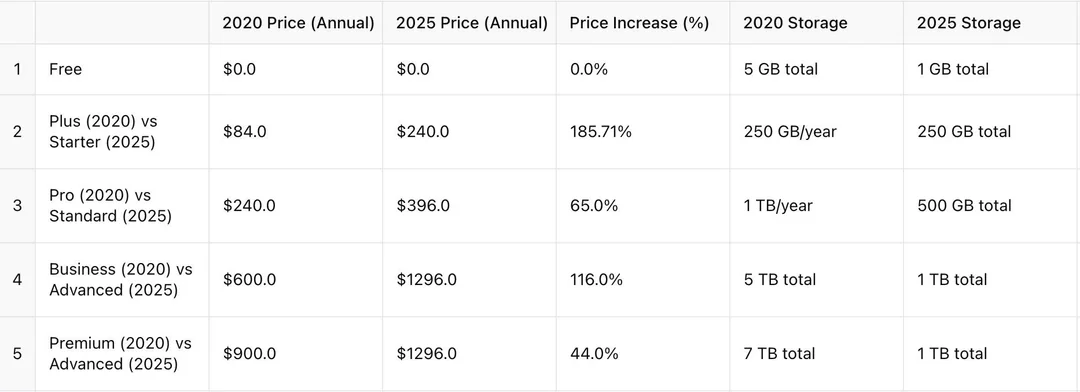
185.71% increase for the starter plan
Why I Built Qubee: Because We Deserved Better
When Vimeo shut down our account in 2017, I was furious. But more than that, I was motivated.
If Vimeo could delete years of our work on a whim—work we paid to host there—then we needed to own our own infrastructure. We needed a platform that:
- Actually belonged to us, not some corporate entity that could change the rules overnight
- Wouldn't hold our video library hostage with arbitrary bandwidth limits or subscription tiers
- Gave us control over how we viewed, stored, and shared our work
- Didn't treat creators like criminals with guilty-until-proven-innocent copyright scanners
That's why we created Qubee.
Not because we wanted to build a video platform. Because we needed one that wouldn't screw us over.
The Bending Spoons Playbook: What's Coming Next
For those still holding out hope that Vimeo will somehow return to its roots under new ownership, let me share what Bending Spoons typically does after an acquisition:
FiLMiC Pro (acquired September 2022):
- Entire 22-person staff laid off by December 2023
- Converted from $19.99 one-time purchase to $40-50/year subscription
- No major updates in over a year, just bug fixes
Evernote (acquired late 2022):
- 129 employees laid off in February 2023
- Nearly all remaining US staff cut by July 2023
- Prices increased 100-160% (Personal tier: $50/year → $130/year)
- Free tier gutted from 250,000 notes to just 50 notes on one device
WeTransfer (acquired July 2024):
- 75% of staff (260 employees) laid off six weeks after acquisition
- Free transfers capped at 10 per month, down from unlimited
See the pattern? Mass layoffs. Price increases. Gutted free tiers.
If you're still on Vimeo thinking "maybe it won't be that bad," then prepare to get spooned.
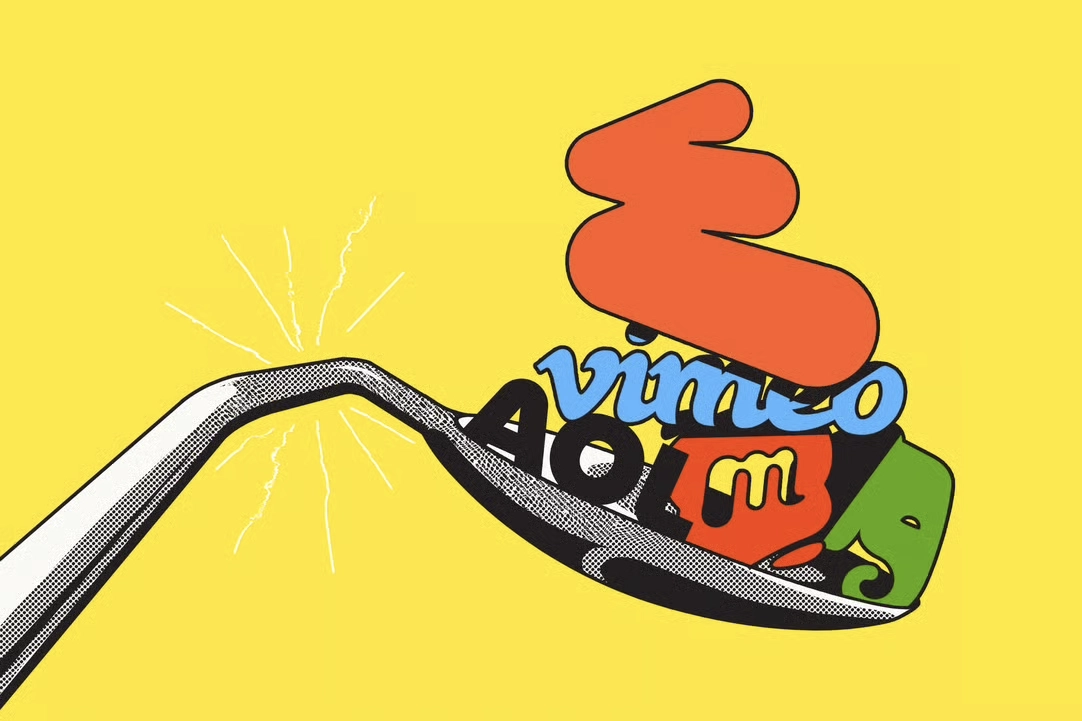
The Bending Spoons playbook: Layoffs, price hikes, and gutted features across every acquisition
"This Is How It Ends": But It Doesn't Have To
Matt Johnson, the filmmaker who documented Vimeo's decline, ended his video essay with this haunting line:
"This is how it ends. Not with a sudden shutdown of the website, but with a slow stutter of playback, failing to buffer before it pauses forever."
He's right about Vimeo, but he's wrong about your video library.
It doesn't have to end like that.
You don't have to watch helplessly as another corporation decides your work isn't worth hosting. You don't have to pay escalating subscription fees for features you don't need. You don't have to worry about waking up one day to find your account deleted over a false copyright claim.
The Wake-Up Call You've Been Ignoring
If you're still on Vimeo, ask yourself honestly:
- How many times has playback failed when showing a client your work?
- How much are you paying per month compared to three years ago?
- How confident are you that your account will still exist next year?
- What's your backup plan when Bending Spoons implements "operational improvements"?
The writing isn't on the wall. The writing is in the financial filings, the acquisition documents, and the 96% subscriber decline.

The warning signs have been flashing for years—are you paying attention?
Why Qubee Exists: For Creators, By Creators Who Got Burned
I didn't build Qubee because I thought I could compete with YouTube's billions of users or Vimeo's enterprise contracts. I built it because I needed a solution to a problem Vimeo created: How do you reliably view, store, and share your video library without putting your livelihood at the mercy of some corporate entity's quarterly earnings targets?
Qubee isn't trying to be the next big social video platform. It's not trying to compete with Staff Picks or algorithm-driven discovery.
It's infrastructure. It's yours. And nobody can take it away.
Here's what that means in practice:
- Your videos, your control – No automated copyright scanners making life-or-death decisions about your account
- Predictable, fair pricing – No surprise bandwidth limits or "seat-based" pricing designed for enterprise teams
- Built by people who got screwed – We know what it's like to lose years of work overnight, so we built something that can't do that to you
- Actual reliability – Because if your platform can't play videos without buffering, what's the point?
The Great Vimeo Migration: Where Betrayed Creators Are Going
The 1.45 million creators who left Vimeo between 2022 and 2024 had to go somewhere. Some went to YouTube, despite the algorithmic chaos and ad-filled experience. Some went to Frame.io for client review workflows. Some invested in Blackmagic Cloud and their own infrastructure.
And some found Qubee.
Because at the end of the day, what we all learned from the Vimeo betrayal is this: You can't build a business on someone else's platform if they can delete you on a whim.
What Happens When You Don't Own Your Infrastructure
Let me tell you what the Vimeo experience taught me that I'll never forget:
When you don't control your video infrastructure, you're always one policy change, one acquisition, one automated scan away from losing everything. Your portfolio. Your client work. Your archive. Your reputation.
Vimeo taught me that in the harshest way possible in 2017. And they've been teaching that same lesson to hundreds of thousands of other creators ever since.
The question is: How many times do you need to learn it?
For Everyone Still Waiting for "The Old Vimeo" to Return
I get it. You remember when Vimeo meant something. When Staff Picks launched careers. When "shot on Vimeo" was a badge of honor. When the platform felt like it was built for filmmakers, by people who understood filmmaking.
But that Vimeo is gone. It's been gone since at least 2017, when they started the copyright purges. It was definitely gone by the enterprise pivot. And it's certainly gone now that a company famous for gutting beloved apps owns it.
Nostalgia is powerful, but it won't protect your video library.
The Uncomfortable Truth About "Creator-First" Platforms
Here's what nobody wants to admit: Vimeo was never really "creator-first." IAC (InterActiveCorp) acquired controlling stake in 2006—before YouTube even sold to Google. Both founders were gone by 2008. The indie ethos was always somewhat performative, a brand identity maintained by a corporation.
The difference is that for a while, corporate interests and creator interests aligned. HD video quality benefited everyone. Staff Picks drove engagement and prestige. The community was good for business.
But the moment those interests diverged—the moment enterprise SaaS revenue became more attractive than individual subscriptions—the mask came off.
Corporations optimize for profit, not loyalty. Vimeo proved it. Every platform eventually proves it.
That's why owning your infrastructure matters.
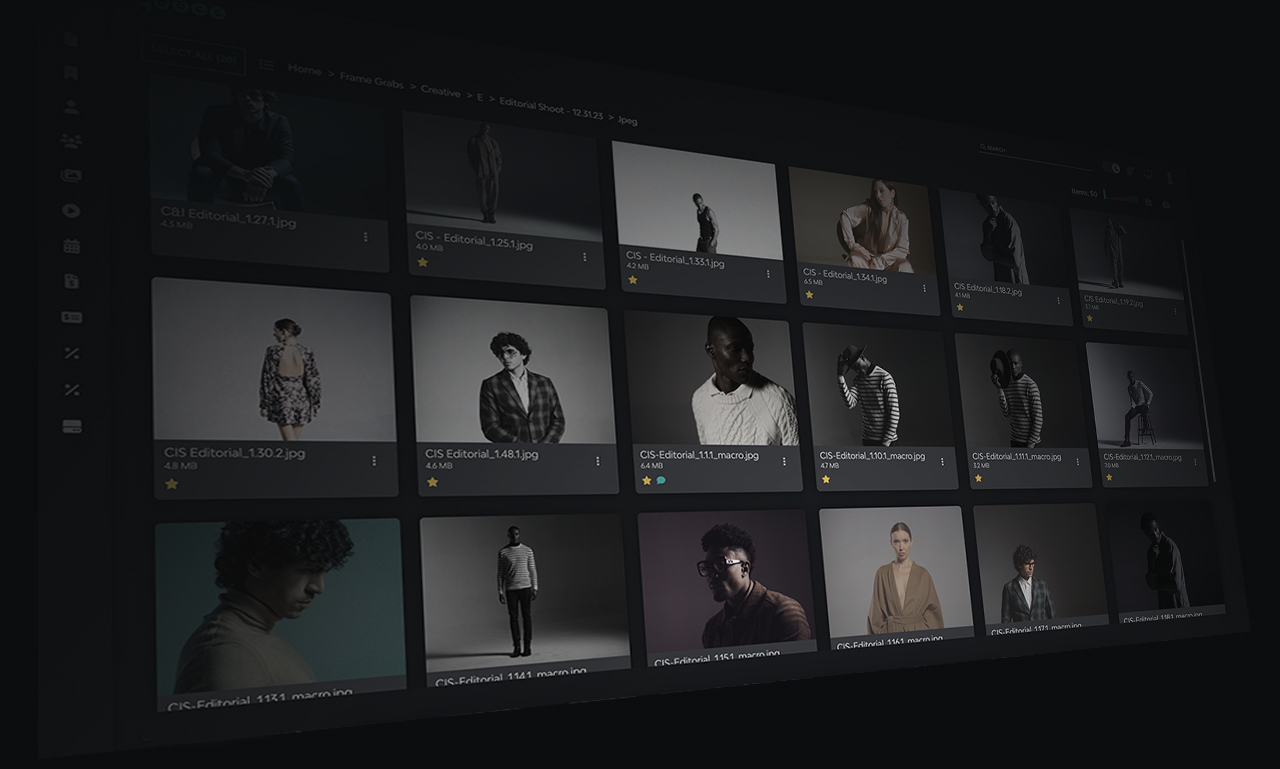
We created our own infrastructure because we can always bet on ourselves
What I'd Tell My 2017 Self (And What I'm Telling You Now)
If I could go back to January 2017 and talk to myself right before Vimeo deleted our account, here's what I'd say:
"This is going to hurt. Losing all that work, all that history, all that trust. It's going to feel like a betrayal. Because it is one.
But it's also going to teach you the most valuable lesson of your career: Never build your business on someone else's platform if you don't have any control over it.
Build your own platform. Control your own infrastructure. Protect your own business."
I can't go back and warn my 2017 self. But I can warn you, right now, in 2026, as Bending Spoons takes over Vimeo and prepares to run the same playbook they ran on FiLMiC Pro and Evernote and WeTransfer.
Get out while you still can.
The Vimeo Story: A Cautionary Tale For Every Creator Platform
Vimeo's decline isn't just about one platform's corporate mismanagement. It's a case study in what happens when creator platforms prioritize growth metrics and enterprise revenue over the communities that built them.
YouTube did it with algorithm changes that destroyed creator livelihoods overnight. Instagram did it by pivoting to video and Reels. Twitter/X did it with... well, everything. And now Vimeo's doing it with the most straightforward betrayal of all: literally deleting loyal users and selling to a company known for gutting products.
The pattern is always the same:
- Build on creator goodwill and community
- Achieve market dominance or investor attention
- Pivot to more "scalable" revenue models
- Abandon or actively harm the original community
- Act surprised when creators revolt
We're watching step 5 play out with Vimeo right now.
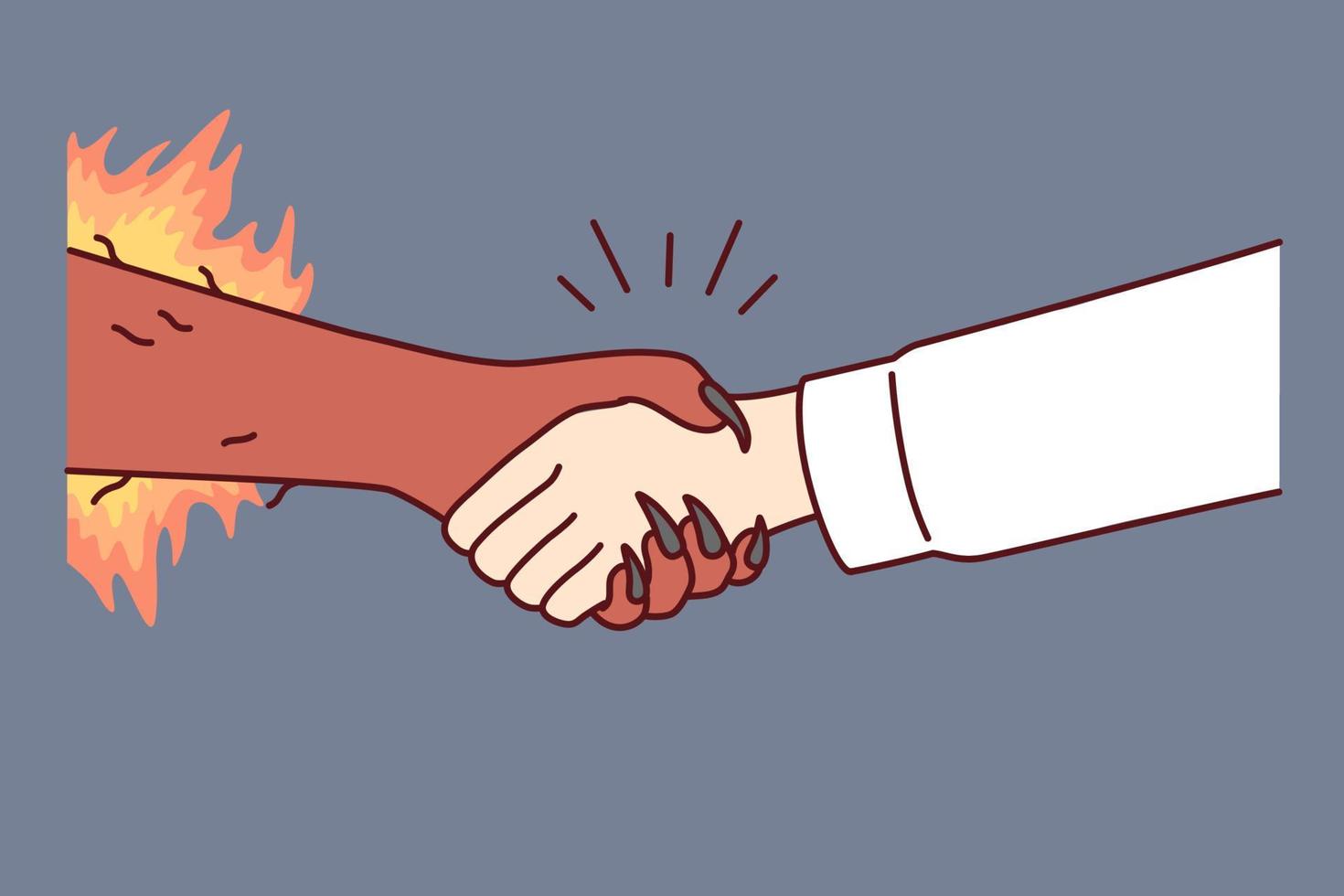
The creator platform betrayal cycle: Rinse and repeat across every major platform
Your Move: What Are You Going to Do?
You've read this far, which means you're at least concerned about what's happening to Vimeo. Maybe you're already migrating. Maybe you're still in denial. Maybe you're frantically backing up your videos right now.
Whatever your situation, here's what I know for certain:
Bending Spoons didn't kill Vimeo. Vimeo killed Vimeo. The acquisition is just the corpse changing hands.
The only question that matters now is: What are you going to do about it?
You can wait and see what happens, cross your fingers and hope Bending Spoons treats Vimeo differently than every other acquisition they've made.
Or you can take control of your video infrastructure right now, before the layoffs start, before the price increases hit, before your account gets flagged by some automated system you can't appeal to.
Why I'm Sharing This Story (And Why It Matters)
I'm not writing this to gloat about being right. I'm writing it because I lived through this nightmare in 2017, and I don't want other creators to get blindsided the way I was.
When Vimeo shut down our account without warning, it was a genuine crisis for our business. Client portfolios gone. Years of work inaccessible. No recourse, no appeal, no human being to talk to. Just an automated decision and a locked account.
Building Qubee was born out of that frustration and betrayal. And now, watching the exact same thing happen to hundreds of thousands of other creators, I feel obligated to speak up.
You don't have to make the same mistake I did. You don't have to learn this lesson the hard way.
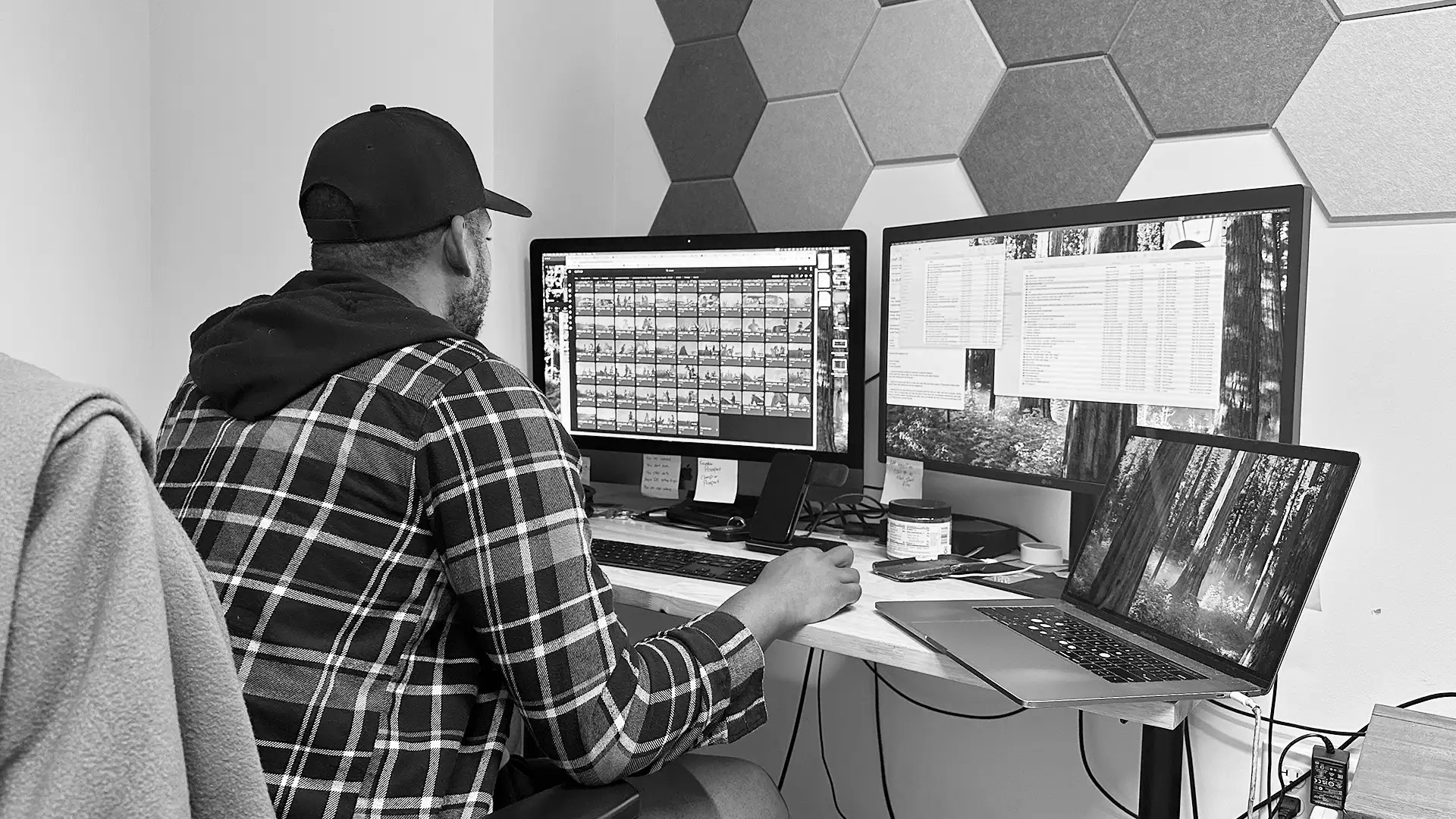
That's me at NOT using Vimeo anymore. Qubee all day now
The Bottom Line: It's Your Work. You Should Own Where It Lives.
At the end of the day, this isn't really about Vimeo vs. Qubee. It's about a fundamental principle:
If you're a professional creator, you cannot afford to build your business on rented land.
Every platform you don't control is rented land. YouTube can demonetize you. Instagram can shadow-ban you. Vimeo can delete you.
And now that Bending Spoons owns Vimeo, the landlord just changed to someone with a documented history of raising rent, cutting services, and evicting long-term tenants.
How much longer are you willing to rent?
Try Qubee: Built By Creators Who Got Burned, For Creators Who Deserve Better
I built Qubee because Vimeo screwed me over in 2017. I built it because I needed a reliable place to view, store, and share my video library without worrying about corporate whims or automated copyright strikes or arbitrary bandwidth limits.
If you're reading this and thinking "I need that too," then Qubee is exactly what you're looking for.
It's not trying to be everything to everyone. It's trying to be exactly what creators like us actually need: reliable video infrastructure that we control.
No Staff Picks. No viral algorithm. No corporate overlords who can delete your account overnight.
Just your videos, your way, on your terms.
The way it should have been all along.
Share Your Vimeo Horror Story
Have you been screwed by Vimeo's copyright strikes, bandwidth limits, or surprise account deletions? Drop your story in the comments on our Instagram post. Let's document what happened so other creators can see the pattern clearly.
And if you're still on Vimeo, waiting to see what happens under Bending Spoons... please, learn from our mistakes. Back up
your videos. Explore alternatives. Don't wait until it's too late.
I learned this lesson the hard way in 2017. You don't have to.
About C&I Studios: We're a Los Angeles-based creative agency specializing in video production, commercial work, and web development.
We started building Qubee after Vimeo permanently shut down our account in 2017 over bogus copyright claims, because we refused to let another platform hold our work hostage. Learn more at c-istudios.com.
See what Qubee can do.
Copyright @ 2026 Qubee | Design by C&I Studios | Changelog | Privacy Policy | Terms & Conditions